
Cloud Security • CSPM • CNAPP • AWS • Azure • MSSP
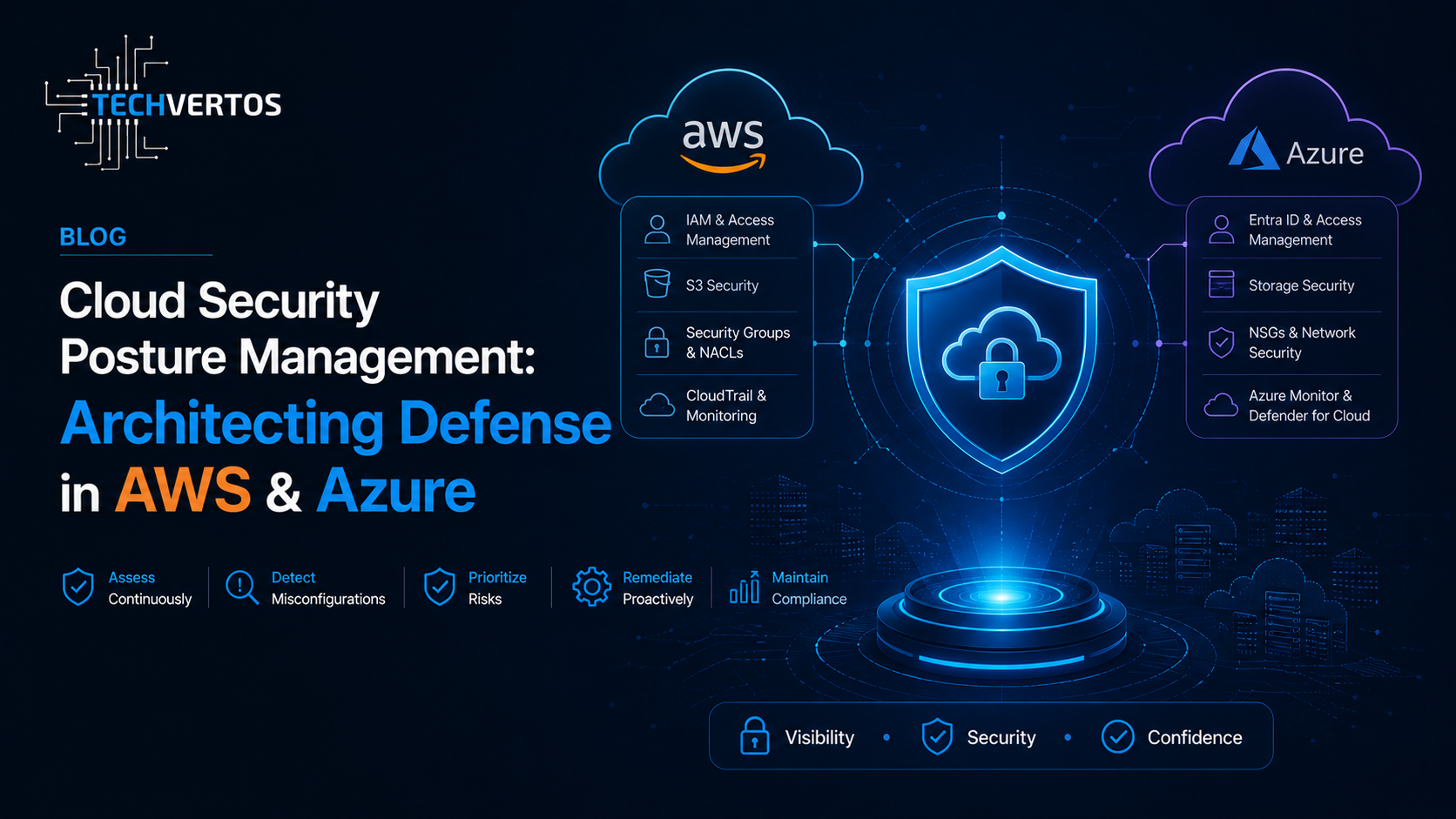
Cloud Security Posture Management: Architecting Defense in AWS & Azure
Cloud infrastructure has transformed modern enterprises, enabling rapid scalability, global deployments, and cloud-native innovation. But as organizations accelerate adoption across AWS and Azure, the attack surface has expanded dramatically. Misconfigured storage buckets, exposed APIs, weak IAM policies, vulnerable workloads, and unmanaged cloud identities now represent some of the biggest cybersecurity risks in modern infrastructure. Cloud Security Posture Management (CSPM), CNAPP platforms, and Managed Security Service Providers (MSSPs) have become essential components of modern cloud defense.
The Evolution of Cloud Security
Traditional on-premise environments were relatively centralized and static. Cloud environments are highly dynamic.
Modern organizations now deploy:
- Containers & Kubernetes clusters
- Serverless functions
- Infrastructure-as-Code (IaC)
- CI/CD pipelines
- Microservices architectures
- Multi-cloud & hybrid-cloud environments
Every new cloud resource introduces another potential attack surface.

Most cloud breaches today are not caused by advanced zero-day exploits. They happen because of simple misconfigurations, excessive permissions, exposed services, or forgotten cloud assets accessible from the internet.
What is Cloud Security Posture Management (CSPM)?
Cloud Security Posture Management (CSPM) continuously scans cloud environments to detect:
- Misconfigured cloud services
- Compliance violations
- Exposed storage buckets
- Weak security groups
- Disabled logging
- Unencrypted databases
- Risky IAM permissions
CSPM tools help organizations continuously monitor and remediate security issues across AWS, Azure, Kubernetes, and multi-cloud infrastructures.
📌 Example Scenario
A DevOps engineer accidentally creates a publicly accessible AWS S3 bucket containing internal backup files.
A CSPM platform immediately detects:
- The bucket is internet-accessible
- Sensitive data exists inside
- Encryption is disabled
- The configuration violates compliance policies
The security team receives an alert before attackers can exploit the exposure.
Understanding Shared Responsibility in AWS & Azure
One of the biggest cloud security misconceptions is assuming cloud providers fully handle security.
AWS and Azure follow a Shared Responsibility Model.
| Cloud Provider Responsibility | Customer Responsibility |
|---|---|
| Physical datacenter security | IAM & user access management |
| Core infrastructure maintenance | Data encryption |
| Cloud availability | Application security |
| Managed service infrastructure | Network & firewall configuration |
| Physical hardware security | Operating system patching |
Understanding CSPM, CWPP, CIEM & CNAPP
Modern cloud security consists of multiple specialized security domains. Most enterprise security platforms now combine these capabilities together.
| Technology | Purpose | Primary Focus |
|---|---|---|
| CSPM | Detect cloud misconfigurations | Compliance, storage, networking |
| CWPP | Protect cloud workloads | Containers, VMs, runtime security |
| CIEM | Manage cloud identities & permissions | IAM governance & privilege management |
| CNAPP | Unified cloud-native protection | CSPM + CWPP + CIEM + DevSecOps |
What is CWPP?
Cloud Workload Protection Platforms (CWPP) focus on protecting workloads running inside cloud environments.
This includes:
- EC2 & Azure Virtual Machines
- Kubernetes clusters
- Containers & Docker workloads
- Serverless functions
- Runtime process monitoring
📌 Example Scenario
A vulnerable Docker container is exploited through an exposed application port.
Attackers deploy cryptocurrency mining malware inside the container.
A CWPP platform detects:
- Abnormal CPU spikes
- Suspicious process execution
- Unauthorized outbound connections
- Runtime behavioral anomalies
What is CIEM?
Cloud Infrastructure Entitlement Management (CIEM) focuses on cloud identities, permissions, and access governance.
In large enterprises, IAM permissions often become overly permissive over time.
Common CIEM Risks
- Unused administrator accounts
- Overprivileged IAM roles
- Orphaned access keys
- Privilege escalation paths
- Cross-account trust abuse
📌 Example Scenario
A temporary contractor receives full administrator privileges during a migration project.
Months later, the account remains active with excessive permissions.
If attackers compromise the account, they may gain unrestricted access to cloud infrastructure.
What is CNAPP?
Cloud-Native Application Protection Platforms (CNAPP) combine CSPM, CWPP, CIEM, and DevSecOps security capabilities into a unified platform.
Instead of managing multiple disconnected security tools, CNAPP platforms provide centralized visibility and risk management.
Developer Deploys Infrastructure
             ↓
CNAPP Scans IaC Templates
             ↓
CSPM Detects Misconfigurations
             ↓
CIEM Reviews Permissions
             ↓
CWPP Monitors Runtime Workloads
             ↓
SOC Receives Unified Security Alerts
Popular Cloud Security Platforms
Several modern platforms dominate enterprise cloud security today.
| Platform | Primary Strength | Category |
|---|---|---|
| Wiz | Agentless cloud risk visibility | CNAPP |
| Orca Security | Deep cloud asset analysis | CNAPP |
| Check Point CloudGuard | Posture & workload security | CSPM + CWPP |
| Prisma Cloud | Enterprise multi-cloud protection | CNAPP |
| Microsoft Defender for Cloud | Azure-native cloud security | CSPM + CWPP |
How MSSPs Help Manage Cloud Security
Many organizations lack dedicated cloud security teams, 24/7 monitoring capabilities, or deep expertise in AWS and Azure security architecture.
Managed Security Service Providers (MSSPs) help enterprises continuously manage, monitor, and improve cloud security posture.
Typical MSSP Responsibilities
- 24/7 cloud security monitoring
- CSPM & CNAPP platform management
- Threat detection & incident response
- Cloud compliance reporting
- IAM & privilege reviews
- Security architecture consulting
- DevSecOps integration
- Vulnerability & workload management
📌 Example MSSP Workflow
An enterprise operates workloads across AWS and Azure.
Their MSSP deploys:
- Wiz for cloud posture visibility
- Orca Security for workload analysis
- Microsoft Sentinel for SIEM monitoring
- CIEM policies for access governance
The MSSP continuously monitors:
- Exposed storage buckets
- Overprivileged IAM accounts
- Suspicious API activity
- Container vulnerabilities
- Runtime anomalies
- Compliance violations
If a critical issue appears, the MSSP alerts the SOC team and may automatically trigger remediation workflows.
DevSecOps & Shift-Left Security
Modern cloud security increasingly shifts “left” into the software development lifecycle.
Organizations now scan:
- Terraform templates
- Kubernetes manifests
- Docker images
- CI/CD pipelines
- Secrets & API keys
before workloads ever reach production.
Cloud security is no longer just firewall management. It now combines posture management, identity governance, workload protection, runtime detection, DevSecOps, compliance monitoring, and continuous cloud visibility across rapidly changing environments.