
AI Security • Cyber Warfare • Adversarial Machine Learning
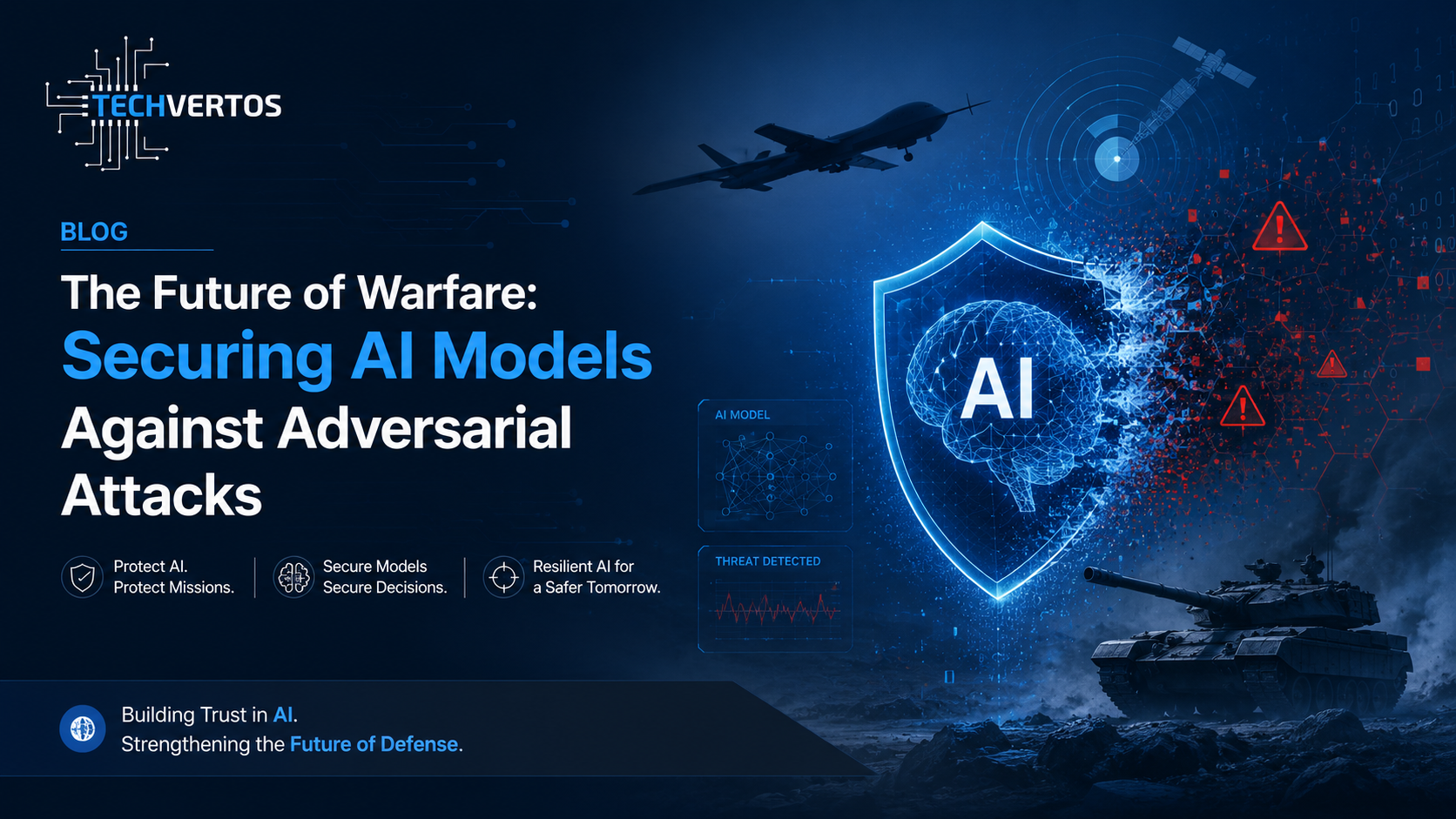
The Future of Warfare: Securing AI Models Against Adversarial Attacks
Artificial Intelligence has become the digital nervous system of modern enterprises, governments, and military operations. But while AI accelerates automation and decision-making, it also introduces an entirely new battlefield where malicious prompts, poisoned datasets, and manipulated outputs can become weapons.
The New Threat Landscape
As organizations rapidly integrate AI systems and Large Language Models (LLMs) into customer support, cybersecurity, healthcare, and financial services, the attack surface has evolved dramatically. Traditional security tools such as firewalls, IDS/IPS, and WAFs are no longer enough when the “payload” is a carefully engineered prompt crafted to manipulate an AI model’s reasoning engine.
Adversarial AI attacks target the logic, behavior, and trust mechanisms of machine learning systems rather than traditional software vulnerabilities. In many ways, AI security resembles psychological warfare for machines: the attacker manipulates perception instead of exploiting memory corruption.

Modern AI systems are increasingly targeted through adversarial manipulation rather than conventional exploits.
Understanding Adversarial Attacks
Adversarial attacks occur when threat actors intentionally manipulate data, prompts, or environmental inputs to deceive machine learning systems. These attacks typically occur during two critical phases:
1. Training Phase: Data Poisoning
Attackers inject malicious or misleading samples into training datasets, causing the model to learn dangerous or biased behavior patterns. Publicly scraped internet data significantly increases this risk because AI systems may unknowingly ingest manipulated content.
“A poisoned dataset can silently transform an intelligent model into an unpredictable insider threat.”
2. Inference Phase: Prompt Injection & Evasion
Prompt injection attacks manipulate deployed AI systems by embedding hidden instructions into user inputs. Attackers may attempt to:
- Override system prompts and safety policies
- Extract confidential training data
- Trigger unauthorized API calls
- Manipulate autonomous AI agents
- Generate harmful or misleading outputs
Learn more about secure AI implementation through OWASP Top 10 for LLM Applications .
Real-World Consequences
The impact of adversarial AI attacks extends far beyond theory. As AI systems gain operational control over critical infrastructure, the consequences become increasingly severe.
🏦 Financial Sector
A manipulated AI assistant could authorize fraudulent transactions, bypass compliance checks, or expose confidential banking data.
🏥 Healthcare Systems
Adversarial perturbations in medical imaging AI could misclassify malignant tumors, directly affecting patient diagnosis and treatment.
🛰️ Defense & Warfare
AI-powered surveillance, drones, and autonomous targeting systems could be manipulated through deceptive environmental inputs.
Securing the AI Pipeline
AI security cannot rely on reactive patching alone. Organizations must implement defense-in-depth strategies throughout the entire MLOps lifecycle.
1. Input Validation & Sanitization
Just like SQL injection prevention in web applications, every user prompt should be treated as untrusted input. Implement:
- Prompt filtering and normalization
- Malicious pattern detection
- Context isolation
- Rate limiting for AI APIs
- Prompt sandboxing techniques
2. Model Robustness Testing
Organizations should integrate adversarial testing directly into CI/CD pipelines. This includes generating adversarial examples and stress-testing model behavior under hostile conditions.
# Example Security Workflow
Input Validation → Prompt Sanitization → AI Firewall → Model Execution → Output Verification
3. Principle of Least Privilege
AI agents connected to external systems should never operate with unrestricted permissions. Limit access using:
- Role-based access control (RBAC)
- Scoped API permissions
- Zero-trust authentication models
- Human approval for sensitive actions
4. Continuous Monitoring & Logging
AI interactions should be continuously monitored for suspicious prompt patterns, abnormal outputs, and unauthorized behavior. SIEM integration and AI telemetry logging are becoming essential for enterprise AI governance.
AI security demands a shift from traditional perimeter defense toward model-centric protection strategies. The future battlefield will not only target networks and systems, but also the intelligence layer driving autonomous decision-making.
Recommended Security Frameworks & Resources
- OWASP Top 10 for LLM Applications
- MITRE ATLAS Framework
- NIST AI Risk Management Framework
- Hugging Face AI Security Documentation
As AI systems continue evolving into autonomous digital operators, securing them against adversarial manipulation will become one of the defining cybersecurity challenges of the decade.